
Does Homeowners Insurance Cover Hail Damage? A Guide for Cheyenne and Wyoming Homeowners
By ChaCha InsurancePublished 10 min read
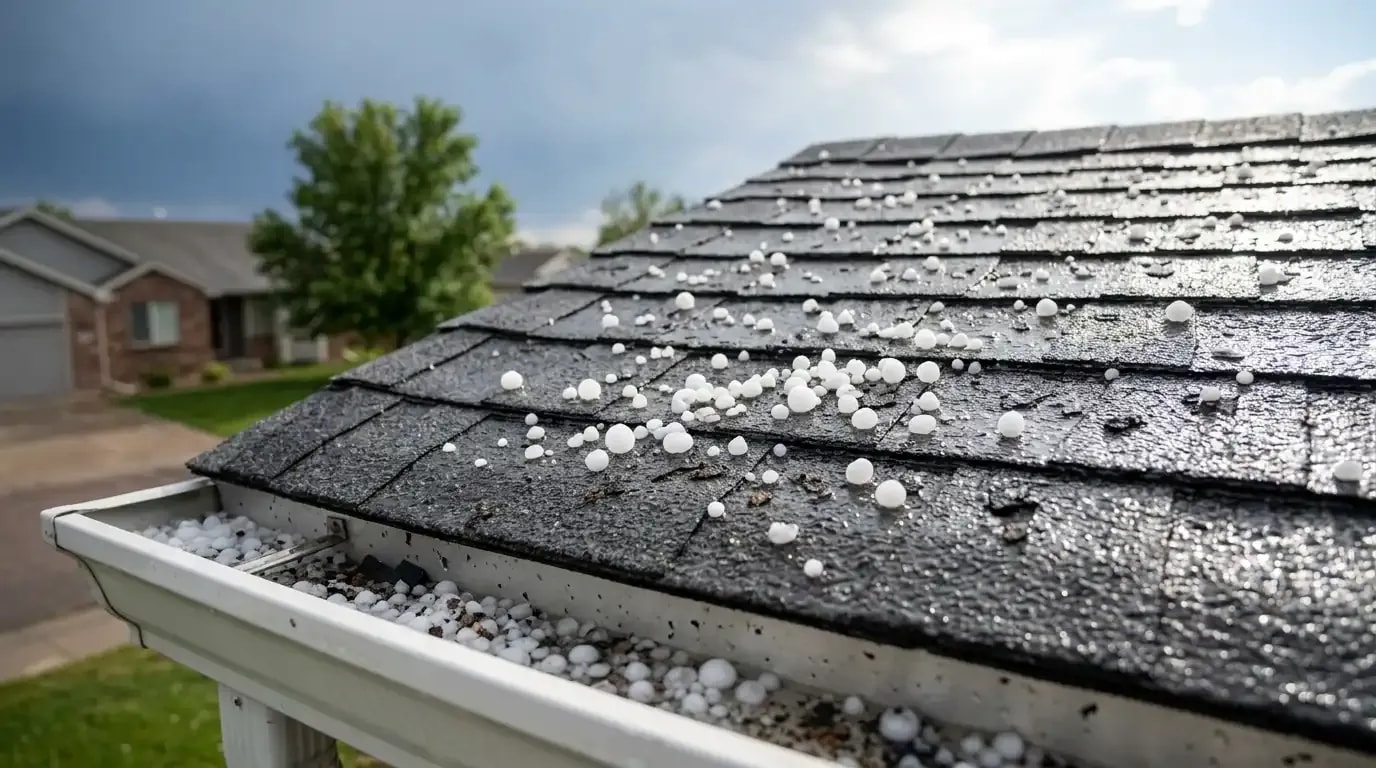
Yes, in most cases. A standard homeowners policy covers hail damage to your house, to detached structures like a garage or shed, and to your belongings, because hail is a covered peril. How much you get paid depends on your wind/hail deductible, how your roof is valued and any cosmetic damage exclusion.
On this page (12 sections)
Hail is common here. The National Weather Service office in Cheyenne reports that the Cheyenne and Sidney, Nebraska, areas average more than 6 days a year with severe hail (1 inch or larger) reported within 25 miles, based on 2000 to 2023 data. The season peaks in June, with a second peak in late July.
Key takeaways
- Hail is a covered peril on standard homeowners, renters and condo policies.
- Many policies have a separate wind/hail deductible set at a percentage of your dwelling coverage, often 1% to 5%.
- Older roofs may be paid at actual cash value, and some policies exclude cosmetic roof damage.
- Hail damage to your car falls under auto comprehensive coverage, not your homeowners policy.
- Document the damage, prevent more damage and report the claim quickly.
Does homeowners insurance cover hail damage in Wyoming?
Yes. The Insurance Information Institute lists windstorm or hail as a covered peril on every standard policy form, including the HO-3 homeowners form, the HO-4 renters form and the HO-6 condo form. If hail cracks your shingles, dents your gutters or breaks a window, your dwelling coverage pays to repair the house, minus your deductible. Other structures coverage pays for a detached garage or shed, and personal property coverage pays for damaged belongings. Three things decide the size of your check. First, many policies apply a separate wind/hail deductible, often a percentage of your dwelling coverage. Second, your roof may be settled at replacement cost or at actual cash value, which subtracts depreciation for age and wear. Third, some policies exclude cosmetic damage that changes how a roof looks without affecting how it works. Wear and tear, flooding and damage to your car are not part of homeowners hail coverage.
What parts of a homeowners policy pay for hail damage?
Each part of a homeowners policy has its own limit. The typical limits below come from the Insurance Information Institute, and you can see how a homeowners insurance policy in Wyoming is put together.
- Dwelling: What it pays for after hail: Roof, siding, windows, gutters and structures attached to the house. Typical limit: Your dwelling limit.
- Other structures: What it pays for after hail: A detached garage, tool shed or gazebo. Typical limit: About 10% of the dwelling limit.
- Personal property: What it pays for after hail: Belongings, such as items ruined after hail breaks a window. Typical limit: Generally 50% to 70% of the dwelling limit.
- Additional living expenses: What it pays for after hail: Extra living costs if covered damage forces you out. Typical limit: Varies; some policies cap dollars or time.
The National Association of Insurance Commissioners (NAIC) notes that homeowners policies in most states cover windstorm and hail, while coastal policies often exclude it. Check your declarations page to be sure.
How does a wind/hail deductible work?
Many policies have two deductibles: an all-peril one for losses like fire or theft, and a special one that, the NAIC explains, applies only when wind or storms cause the damage.
Wind/hail deductibles are usually a percentage, typically 1% to 5%, according to the Insurance Information Institute. The percentage is based on your home's insured value, not the size of the damage. Some policies also have a separate roof deductible.
Hypothetical example (round numbers for illustration only, not a quote or a typical price): Say your home has $300,000 of dwelling coverage, a $1,000 all-peril deductible and a 2% wind/hail deductible. A hailstorm causes $15,000 of covered roof damage.
- Your deductible: If a flat $1,000 deductible applied: $1,000. With the 2% wind/hail deductible: $300,000 x 2% = $6,000.
- Covered damage: If a flat $1,000 deductible applied: $15,000. With the 2% wind/hail deductible: $15,000.
- Insurer pays (before any depreciation): If a flat $1,000 deductible applied: $14,000. With the 2% wind/hail deductible: $9,000.
With only $5,000 of damage, the 2% deductible would be bigger than the loss, and the claim would pay nothing. Know your number before hail season.
Will my insurer pay replacement cost or actual cash value for my roof?
Replacement cost value (RCV) pays to repair or replace damaged property with materials of like kind and quality, with no deduction for depreciation. Actual cash value (ACV) subtracts depreciation for age and wear. The NAIC says that if your declarations page does not specify replacement cost, you likely have actual cash value.
Roofs often get special treatment. The NAIC notes that some policies pay ACV on the roof and RCV on the rest of the home. The Insurance Information Institute says most insurers require an inspection if your roof is over 20 years old when you apply, and some cover older roofs only at ACV.
The gap can be large. In an NAIC example, two neighbors each need a $15,000 roof and each has a $1,000 deductible. Replacement cost pays $14,000, while actual cash value also subtracts $10,000 of depreciation and pays $4,000.
With replacement cost, your insurer may pay ACV first and the rest, called recoverable depreciation, once repairs are done. The NAIC says the time limit to collect it usually runs from 6 months to one year, depending on state law and your policy.
What is a cosmetic damage exclusion?
A cosmetic damage exclusion removes coverage for damage that changes how a roof looks without stopping it from doing its job, such as dents in a metal roof that still keeps water out. The Texas Department of Insurance notes that a metal roof discount may come with this exclusion and that insurers can add new exclusions at renewal. If you have a metal or impact-resistant roof, read your endorsement and ask your agent what it excludes.
What hail damage is usually not covered?
- Wear and tear. A homeowners policy is not a maintenance contract, so keeping up an aging or leaking roof is your job.
- Cosmetic damage, if your policy excludes it.
- Damage you could have prevented. You must protect your home from further damage, such as by tarping a hole.
- Upgrades. Coverage pays for like kind and quality, not better materials, and building code upgrades need ordinance and law coverage.
- Flooding. Standard homeowners and renters policies do not cover flood.
- Your car. That falls under your auto policy.
How do I file a hail damage claim, step by step?
- Stay safe. Watch for downed power lines, broken glass and gas leaks, and stay off a damaged roof.
- Document before cleanup. Take dated photos and video of the roof, siding, windows, gutters, fences and vehicles.
- Prevent more damage. Tarp holes and board up broken windows. Save the receipts for reimbursement.
- Check your deductible. If the damage is clearly below it, you might pay for repairs yourself, but some damage is hard to see from the ground.
- Report the claim quickly by phone, app or through your agent, and note your claim number.
- List damaged belongings, and keep damaged items until the adjuster has seen them.
- Meet the adjuster with your photos, lists and any contractor bids.
- Hire carefully. Get written bids, wait for the insurer to approve the price before permanent repairs, never pay in full upfront, and read any assignment of benefits form before you sign.
- Send proof of repairs to collect any recoverable depreciation before the deadline.
How long do I have to file a hail claim?
No single deadline applies to everyone. Your policy sets the time limits, so read its conditions section or ask your agent. The NAIC advises notifying your insurer as soon as you know there is damage and decide to file, and some insurers also require a signed proof of loss form. Waiting makes it harder to tie damage to one storm.
Wyoming law puts a clock on the insurer too. As of October 2026, Wyoming Statute 26-15-124 requires an insurer to accept and pay, or reject, a property insurance claim within 45 days after it receives the claim and supporting bills. If a claim stalls, the Wyoming Department of Insurance Consumer Affairs Section (307-777-7402) can investigate delays and improper denials, though it cannot force a company to pay or decide the amount of your loss.
Does car insurance cover hail damage?
Yes, if you carry comprehensive coverage. The NAIC and the Insurance Information Institute both list hail among the non-collision losses that comprehensive pays for. Liability coverage alone will not pay for hail damage to your own car.
Comprehensive usually has its own deductible and pays up to your car's market value, not what you paid for it. Lenders will likely require it if you lease or finance. Check whether you have auto insurance with comprehensive coverage before the next storm.
Are renters and condo owners covered for hail?
Renters: Your landlord's policy covers the building, not your things. A renters policy (HO-4) covers your belongings for windstorm or hail and pays additional living expenses if a covered loss forces you out. Learn more about renters insurance for your belongings.
Condo owners: Your association's master policy covers common areas such as the roof. Your condo policy (HO-6) covers your belongings and the parts of your unit the master policy leaves out. Loss assessment coverage can reimburse your share of an assessment charged to all owners after a covered loss. See how condo insurance works with your association's master policy.
How ChaCha Insurance can help
ChaCha Insurance is an independent agency based in Cheyenne. We can go over your declarations page with you, explain your wind/hail deductible and how your roof would be valued, and talk through options if you want different terms before the next storm. Contact ChaCha Insurance to set up a review.
Coverage in this guide
Frequently asked questions
Will filing a hail claim raise my homeowners premium?
It can. The NAIC notes that how often you file and the types of claims you file often affect your premium and whether your insurer renews. Most insurers report homeowners claims to shared databases such as CLUE. If repairs cost little more than your deductible, paying for them yourself may make more sense.
Should I hire a public adjuster for a hail claim?
A public adjuster is a professional you hire to estimate damage and negotiate your claim, for a flat fee or a percentage of the settlement, depending on state law. Your insurer still sends its own adjuster and does not have to accept your public adjuster's estimate. Get the fee terms in a written contract.
Can a roofing contractor handle my insurance claim for me?
Be careful with an assignment of benefits, which transfers your policy rights to the contractor. The NAIC warns that you may give up some or all of your rights, and you do not have to sign one to get repairs done. Check the contractor's license and insurance, and never pay in full upfront.
Will insurance pay to upgrade to an impact-resistant roof?
Usually not in full. Replacement cost pays for like kind and quality, not a pricier roof than the one you had, so you would pay the difference. Ask whether your insurer offers a discount for impact-resistant roofing, and whether that discount comes with a cosmetic damage exclusion.
What can I do if my hail claim is denied?
Ask for the denial in writing and keep all paperwork. If you disagree about the amount, check your policy for an appraisal clause, since appraisal settles costs, not coverage. Before you consider arbitration or a lawsuit, contact the Wyoming Department of Insurance Consumer Affairs Section for help.
Sources
- Hail Climatology, National Weather Service Cheyenne
- Which disasters are covered by homeowners insurance?, Insurance Information Institute
- What is covered by standard homeowners insurance?, Insurance Information Institute
- Understanding your insurance deductibles, Insurance Information Institute
- How your roof influences your home and business insurance, Insurance Information Institute
- Settling insurance claims after a disaster, Insurance Information Institute
- What is covered by a basic auto insurance policy?, Insurance Information Institute
- Auto insurance basics: understanding your coverage, Insurance Information Institute
- Renters insurance, Insurance Information Institute
- Insuring a co-op or condo, Insurance Information Institute
- Post-Disaster Claims Guide, NAIC
- A Consumer's Guide to Home Insurance, NAIC
- What to do before and after a storm, NAIC
- What does auto insurance cover?, NAIC
- Consumers, Wyoming Department of Insurance
- Information to know before you file a complaint, Wyoming Department of Insurance
- Wyoming Statutes Title 26, Insurance Code (W.S. 26-15-124)
- Metal roofs and home insurance: 4 key facts for homeowners, Texas Department of Insurance
- Hail damage to your home or car? What to do next, Texas Department of Insurance