Interested Party vs Additional Insured on Renters Insurance: Which Does Your Lease Request?
By ChaCha InsurancePublished 10 min read
Your landlord wants to be "listed" on your renters insurance, but your lease uses words you've never seen. Do they want to be an interested party or an additional insured?

On this page (10 sections)
Most apartment leases that ask to be listed on your policy want interested party status, also called "additional interest." That gives the landlord a heads-up if your policy is canceled or lapses. It doesn't give them coverage. Additional insured is a different request. It makes the landlord a covered person under your policy, usually for liability only.
Picking the wrong one can put you in breach of your lease. It can also give your landlord rights under your policy that you never meant to hand over. Below, you'll see how to read your lease clause and what each option does. You'll also see how to spot the right wording on the document your insurer sends back.
Interested Party vs Additional Insured at a Glance
| Interested party | Additional insured | |
| What it means | Gets told if your policy changes or ends | Is covered under part of your policy |
| Other names | Additional interest, third-party designee | Additional insured endorsement |
| Gets cancellation or lapse notices? | Yes, that's its purpose | Not automatically, so check the wording |
| Covered by your policy? | No | Yes, usually liability only |
| Can I file a claim? | No | Possibly, in a covered liability event |
| Typical cost | Usually free | Often raises your premium |
| Availability on renters policies | Widely offered | Less common; ask your insurer |
If you only remember one thing: an interested party gets news about your policy, and an additional insured gets protection from it.
What Is Your Lease Really Asking For?
Lease language isn't always clear. Here are the three patterns you're most likely to run into. Pull out your lease and see which one looks familiar.
Pattern 1: Notice-only wording
Some leases ask you to have your insurer list the landlord as an "interested party" or "additional interest" so they receive notice if the policy is canceled, not renewed, or lapses.
Look for words like "notice," "cancellation," "lapse," and "proof of coverage." They all point to a landlord who wants to know you're still insured, not one who wants coverage for themselves. If this sounds like your lease, interested party status is almost certainly what's being requested.
Pattern 2: Coverage wording
Other leases go further. They may require an "additional insured" and ask for a certificate or endorsement.
Watch for phrases like "additional insured," "endorsement," "as their interests may appear," or "liability coverage." These are signs the landlord wants a place under your liability coverage, not just a notice. This wording shows up more often in leases written by attorneys and in leases from large property companies.
Pattern 3: Unclear wording
Then there's the in-between: "tenant must name landlord on the policy," or "landlord must be listed on tenant's insurance." That could mean either one.
Don't guess. Start by checking whether your lease has a definitions section or an insurance addendum that explains the term. If it doesn't, email your landlord or property manager and ask: "Do you need to be listed as an interested party for notices, or as an additional insured for coverage?"
What Notice Rights You're Actually Giving
An interested party is a person or company you name on your policy so they get updates about it. You may also see it called an "additional interest" or a "third-party designee." For renters insurance, that's usually your landlord or property manager.
What it gives your landlord
- Copies of notices if your policy is canceled, not renewed, or lapses
- Proof that you have a policy in the first place
What it doesn't give your landlord
- No coverage under your policy
- No right to file a claim
- No ability to change or cancel your policy
- Typically no access to the details of your policy if they call your insurer
Think of it like adding someone to a "heads-up" list. They're informed, not protected.
For most renters, the best part is the cost. Many insurers add an interested party for free, and many let you do it any time through an app, your online account, or a phone call. Ask your insurer to be sure, since practices differ between companies.
Here's why landlords like it. Say you hand over proof of insurance when you sign your lease. Six months later, you miss a payment and the policy is canceled. If the landlord is listed as an interested party, they're likely to be notified. If they aren't, they may not find out until something goes wrong.
One caution: how and when notices are sent depends on your insurer and your state's rules. Being listed is helpful, but it isn't a guarantee that your landlord will hear about every change. Your state's insurance department can tell you what rules apply where you live.
What Insured Status Really Means
An additional insured is someone added to your policy by an endorsement, which is an add-on to your policy. They get some of your coverage. On a renters policy, that's generally liability coverage only. It doesn't cover the landlord's building or belongings.
Why would a landlord ask for it? They may want to be protected if someone is hurt in your unit and the claim reaches them too. This kind of request is common in commercial leases covered by business insurance, and some corporate landlords and attorney-drafted residential leases carry the habit over.
Why is it unusual for renters?
- Many insurers don't offer it on personal renters policies.
- Where it's offered, it can raise your premium, since the insurer is extending coverage to another party.
- Some insurers say a landlord should carry their own property or homeowners insurance policy for the building, since renters insurance is built to protect the tenant.
Not every company draws the line in the same place. One may refuse the request outright, while another may approve it for an extra charge. That's why asking your own insurer, or working with an independent insurance company.
What it can mean for you
- The landlord may be able to make a claim in a covered liability situation.
- Your policy's limits may end up shared in that situation.
- A claim involving the landlord could show up on your claims history.
You don't need to panic about these. Just know them, and ask your insurer how they'd work on your policy.
Notice Rights vs Insured Status: Which Situation Are You In?
Scenario 1: Your landlord just wants to know you stay insured. Ask for interested party status. This is the most common situation for apartment renters.
Scenario 2: Your lease clearly requires "additional insured." Call your insurer before you sign. Ask whether they offer it, what it costs, and exactly what document they'll give you. If they don't offer it, you'll want to know now, not on move-in day.
Scenario 3: Your lease says "listed on your policy" and nothing more. Ask your landlord in writing which they mean. Then act on the answer.
Two things people often get wrong
- "Additional interest and interested party are different." They're the same thing. Different insurers use different names.
- "An additional insured is just a stronger version of an interested party." It's not. The two do different jobs: one sends notices, the other extends coverage.
Reading an Insurer-Issued Document
Once you've made your request, your insurer will send something back. It might be a confirmation page, a declarations page, or a certificate or evidence of insurance. Here's how to read it so you can tell whether it matches what your lease asked for.
- Named insured. This should be your name, spelled the way it appears on your lease. A mismatch can cause trouble later.
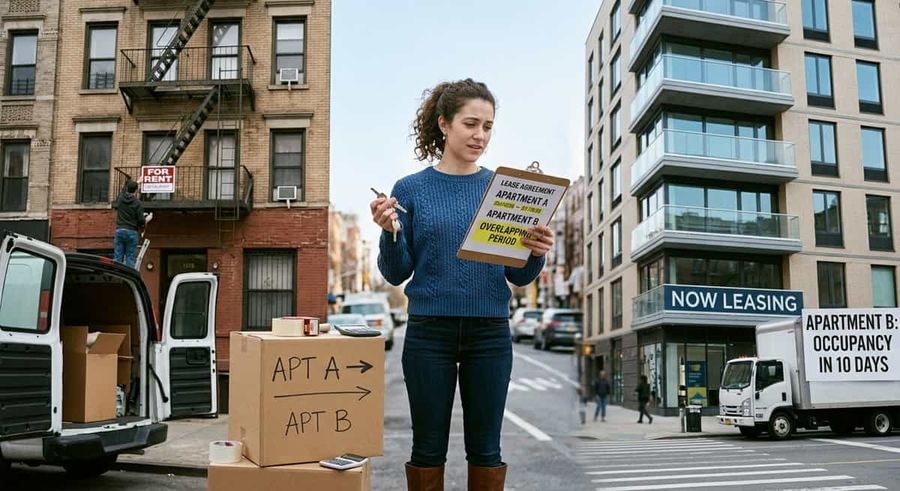
- Policy number and dates. Policy number and dates. Check that the coverage period covers your lease start date and doesn't expire before your lease does, or that renewal is clear, especially if you are insuring two apartments during overlapping leases.
- Interested party or additional interest. Your landlord's legal name and mailing address should appear exactly as the lease shows them. Typos here can mean notices go to the wrong place.
- Additional insured endorsement. If your lease required one, look for it by name. If it isn't listed, the document doesn't prove you have that status.
- Liability limit. Compare it to the minimum in your lease. If the lease says $100,000 and the document shows $100,000 or higher, you're set.
- Fine print. Many certificates say they're for information only and don't change the policy. That's normal. It means the document proves you have coverage but doesn't expand it.
What this document proves to your landlord: that a policy exists, who's on it, and for how long. What it doesn't prove: that nothing will change later. Only the policy itself and your insurer's notices do that.
How to Respond to Your Lease Request, Step by Step
- Find the exact clause. Check the main lease and any insurance addendum.
- Get your landlord's legal name and mailing address. Use exactly what the lease says, or what the landlord confirms in writing.
- Ask your insurer what they offer. Find out which designations they allow, what they cost, and how long it takes.
- Request the one your lease states. Don't pick the "bigger sounding" option out of caution. Ask for what's asked of you.
- Get written confirmation. Send it to your landlord before your deadline, and ask them to confirm they received it.
- Keep copies. Save one with your lease and one with your policy papers.
When the Answer Isn't Clean
Your landlord wants additional insured and your insurer says no. Don't let this sit. Ask your landlord whether interested party status would satisfy the lease. Ask your insurer whether any alternative exists. You can also ask your landlord to contact the insurer directly to explain what they need.
You have roommates. Your policy may cover only the people named on it. If your landlord expects everyone in the unit to be covered, ask your insurer how roommates should be listed. This is a separate question from an interested party or additional insured.
Property manager vs. owner. The company that runs your building may not be the legal owner. Ask which name belongs on the policy. Your lease or a quick email will tell you.
Your state's rules. Lease and insurance rules differ by state. If you and your landlord disagree about what the lease requires, a local tenant resource or an attorney can help.
The Bottom Line
If your lease wants notices, ask for an interested party. If it wants coverage, ask your insurer whether additional insured is available. If the wording is unclear, ask your landlord and get the answer. A few minutes now can save you a lease dispute later.
If you're shopping for a policy, compare renters insurance policy that lets you add an interested party easily.
How ChaCha Insurance can help
ChaCha Insurance is an independent insurance agency based in Chatsworth, California. Tell us what you need covered and we will compare quotes from the insurance companies we work with, free.
Coverage in this guide
Frequently Asked Questions
Is "additional interest" the same as "interested party"?
Yes. Insurers use the terms interchangeably. Both mean someone who gets notices about your policy and has no coverage under it.
Does an interested party get coverage?
No. They get updates, not protection. They also can't make claims or change your policy.
Can my landlord make me add them as an additional insured?
Landlords can set insurance rules in a lease. But your insurer decides whether it will offer additional insured status on a renters policy, and many don't. Check with your insurer before you agree to it.
Does adding a landlord cost extra?
Interested party status is usually free. Additional insured status can raise your premium. Ask your insurer for the exact price.
What happens if my policy lapses and my landlord is listed?
Your insurer will typically send the landlord a notice. A lapse can still put you in breach of your lease, so the fix is to avoid the gap, whether through autopay or renewal reminders.