Can Renters Insurance Cover Two Apartments During Overlapping Leases?
By ChaCha InsurancePublished 9 min read
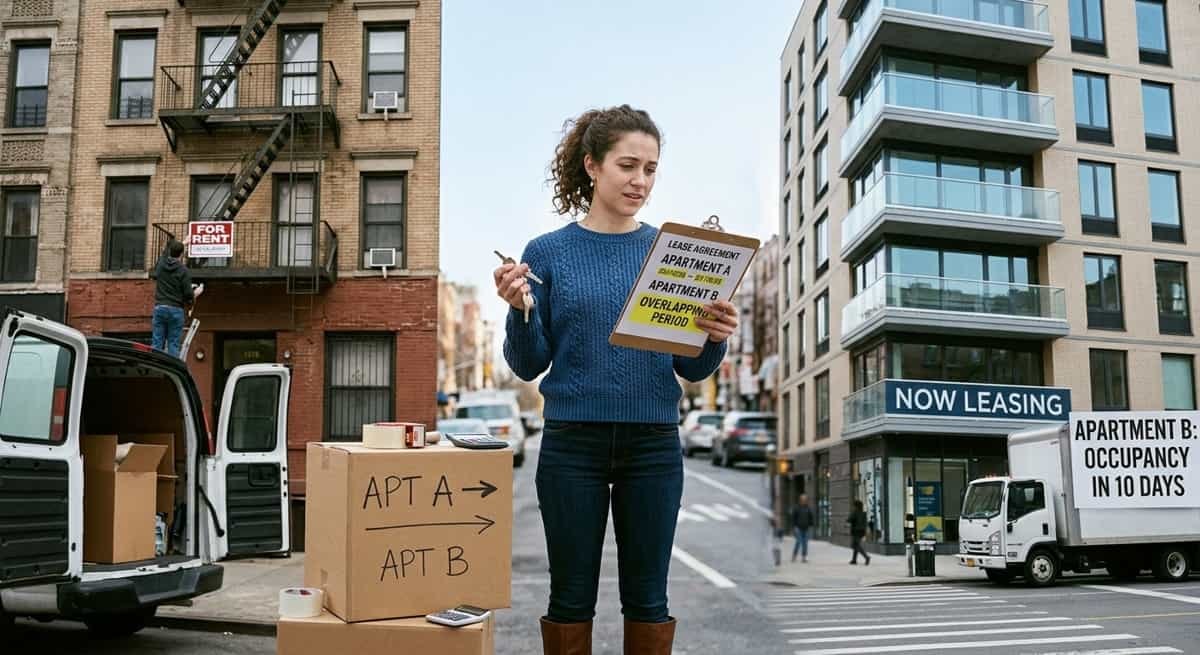
Sometimes renters can insurance cover two apartments, for a short time, but not automatically. A renters policy is tied to the address listed on it. With renters insurance for overlapping leases on two apartments, your belongings at the new place may get temporary or limited coverage, and your liability coverage usually follows you. Tell your insurer your move dates and get the answer in writing.
On this page (9 sections)
Having two apartments at once is one of the most stressful parts of moving. You're paying double rent, hauling boxes back and forth, and trying to remember whether anyone told you to call your insurance company. The good news is that with a little planning, you can usually stay protected the whole way through.
Why overlapping leases confuse renters insurance
A standard renters insurance policy. When you buy a policy, you give your insurer the address where you live. That address is printed on the first page of your policy, called the declarations page. Think of it as your policy's home base.
Insurers set your price, and decide what they'll cover, based on that address. So if you're living somewhere that isn't listed, they can push back on a claim tied to that place.
The key point is simple. Signing two leases doesn't make two homes insured. You have one policy pointing to one home, unless you change it.
What's covered at the old and new apartment
Keep your policy active until you've fully moved out and handed back the keys. Anything still sitting in that apartment, and any claim from a break-in during the overlap, depends on your policy still being in force. Cancelling the day you pick up the new keys is a common mistake.
Many standard policies include a short grace period for a newly acquired home. One insurer's wording, for example, lifts the usual cap on belongings at a new main residence for 30 days from the time you start moving things in. Other companies word this differently, or don't offer it at all. So don't assume. Ask.
| Situation | What commonly applies | What to confirm |
| Belongings still at the old apartment | Normal coverage while the policy is active and you still live there | Whether anything changes once you stop sleeping there |
| Belongings at the new apartment before you change your address | A temporary extension, or only the smaller off-premises limit | The start date, the length of the extension and the dollar limit |
| After you stop living at the old apartment | Coverage may shrink, especially for an empty unit | How long it lasts and when it's safe to cancel |
| Two policies at once | Each policy covers its own address more clearly | You can't be paid twice for the same loss |
Is a second policy worth it? Two policies cost more, but they remove guesswork. They don't pay you double, though. If something is stolen, you can't collect from both insurers for the same loss. A second policy is about clarity, not extra payout.
If your overlap is short, a few days to two weeks, many people keep their current policy and change the address on move-in day. If the overlap runs a month or more and you'll keep a lot of belongings in both places, ask your insurer whether a short second policy makes sense.
Property in transit: truck, movers and storage
Belongings in a moving truck are usually treated like belongings anywhere else away from home. They fall under your off-premises limit, and only for the events your policy names, such as theft or fire. That limit is often about 10% of your personal property coverage.
Here's what that looks like. If you have $30,000 in personal property coverage, you might have only around $3,000 for everything that's in transit. That may not go far if a truck with a whole apartment inside is stolen.
A few more things to know:
- Your deductible still applies to a claim for items in transit.
- Movers' basic coverage is usually based on weight, not value.Under federal rules, released value protection is often just 60 cents per pound per item, so a TV or laptop may be worth far more than it pays. Read your moving contract and ask about full value protection.
- Damage caused by the movers is usually a claim against the moving company, not your renters insurance.
- A rental truck isn't covered by your renters policy. Ask the rental company about damage waivers and extra liability coverage.
- A storage unit is often covered, but under the same smaller limit. Some policies also limit how long.
| How you move | Who's likely responsible if something goes wrong | What to check |
| Friends and family with your own car | Your renters policy, up to the off-premises limit | The dollar limit and your deductible |
| Rental truck | Your policy for your belongings; the rental company for the truck | Damage waiver and liability add-ons |
| Professional movers | The moving company, for damage they cause | Whether their coverage is by weight or by value |
| Storage unit | Your policy, up to the off-premises limit | The cap and any time limit |
Jewelry, electronics and art often have their own per-item caps. Where you can, carry valuables in your own car. And before move day, take photos or a short video of your belongings. It takes about twenty minutes and makes any future claim much easier.
Liability during the overlap
Liability coverage generally follows you, not the building. If a friend trips over a box at your old place or your new one, or you accidentally damage something while carrying a couch, your personal liability coverage is generally there for you at both addresses. Still, check your policy wording to be sure.
Where things get tricky is the lease. Many landlords want proof of insurance before they hand over keys. Some require a minimum liability amount, such as $100,000, while tenants who want extra protection above their base policy limits can add umbrella insurance . Some also ask to be listed as an "additional interest," so they're told if your policy lapses. If your policy still shows your old address, the new landlord may not accept it, and missing the requirement can put you in breach of your lease.
One more question worth asking your insurer: what happens if you damage the apartment itself during move-in, like a gouged wall or an overflowing sink? Policies treat damage to a place you rent differently from damage to other people's property, so don't assume. Ask before move day.
Moving-period conditions that can limit your coverage
A few details can quietly shrink your protection during a move:
- Telling your insurer too late: Give them at least two weeks' notice, along with your new address and move-in date.
- Living at an address that isn't listed: If you're staying somewhere your policy doesn't name, your insurer can dispute a claim there.
- Leaving an apartment empty: Some policies treat an unoccupied home differently. Ask how long your old place stays covered once you've stopped living there.
- Moving to another state: Your insurer may not sell policies there, so you may need to compare insurance quotes for a brand-new policy a few weeks ahead .
- A new price: Your new address can raise or lower your premium based on the area and building.
- Cancelling the old policy too early: Start the new coverage first, then cancel the old one once you've returned the keys, following the same timing rules used when switching policies without a coverage gap. .
- Roommates: Only people named on a policy are covered. A roommate who's moving with you may need their own.
Overlapping lease timeline: before, during and after the move
This is a suggested order of steps, not a rule from any insurer. Your timing may differ.
| When | What to do | What could go wrong |
| 30+ days before | Read your declarations page. Note your off-premises limit. Ask your insurer how they handle overlaps. | Finding out too late that your insurer doesn't cover your new state |
| 14 days before | Give your insurer the new address and dates. Ask for an updated declaration page and send it to your landlord. | The landlord holds your keys until they see proof |
| Key pickup day | Confirm in writing the date the new address is covered. Keep the old policy active. | Coverage starts later than your first load |
| Moving days | Photograph your belongings. Carry valuables yourself. Keep your movers' paperwork. | A loss that's bigger than your transit limit |
| Mid-overlap | Check what's still in each place. Lock up the old unit. Call your insurer if the overlap runs longer than planned. | An overlap that quietly stretches past a grace period |
| Old apartment return | Take final photos at the walk-through. Keep your old policy until the keys are handed back. | Cancelling before you're actually out |
| 7 to 30 days after | Cancel the old policy or confirm the transfer. Ask about a refund for unused days. Make sure your landlord has current proof. | Paying for two policies longer than you need to |
Questions to ask before changing your address
Call your insurer or agent and work through this list. It only takes a few minutes.
Policy location
- On what date will my new address be covered?
- Does my policy include a grace period for a newly acquired home, and for how many days?
- Will my old address stay covered after I stop living there, and for how long?
Belongings
- What's my off-premises limit in dollars?
- Are my jewelry, electronics or other valuables subject to per-item caps?
In transit
- Does it matter whether I pack or the movers do?
- Does my coverage apply in a rental truck or storage unit, and is there a separate deductible?
Liability
- Does my liability coverage apply at both addresses during the overlap?
- Can you list my new landlord as an additional interest, and does my coverage meet the lease's required limit?
Paperwork and billing
- Can you send an updated declarations page today?
- Will my premium change, and from what date?
- If I cancel, do I get a refund for unused days?
The bottom line
So, can renters insurance cover two apartments during overlapping leases? Often, for a short time and in limited ways, and mostly when you plan ahead. Paying rent on two places doesn't mean both are insured.
Call your insurer, share your move dates, ask the questions above and get the answers in writing. A short call now can save you a lot of stress later.If you'd like help, a licensed independent insurance agent can review your policy and walk through your dates with you, with no pressure.
How ChaCha Insurance can help
ChaCha Insurance is an independent insurance agency based in Chatsworth, California. Tell us what you need covered and we will compare quotes from the insurance companies we work with, free.
Coverage in this guide
Frequently asked questions
Do I need two renters insurance policies?
Not always. Many people keep one policy and change the address at the right moment. Two policies can make sense if you're paying for two homes for a longer stretch and keep a lot of belongings in both. Ask your insurer first.
Is a storage unit covered?
Often yes, but usually under the same smaller off-premises limit. Check the dollar cap and whether there's a time limit.
Does my old policy keep covering me after I move out?
Not necessarily. Once you no longer live there, coverage can shrink or end. Keep the policy until the keys are returned, and ask your insurer how an empty apartment is treated.
Will changing my address cost extra?
Maybe. Many insurers don't charge a fee, but your premium can go up or down depending on the new location.