
Does a Homeowners Policy Cover Inventory for a Small Online Store?
By ChaCha InsurancePublished 10 min read
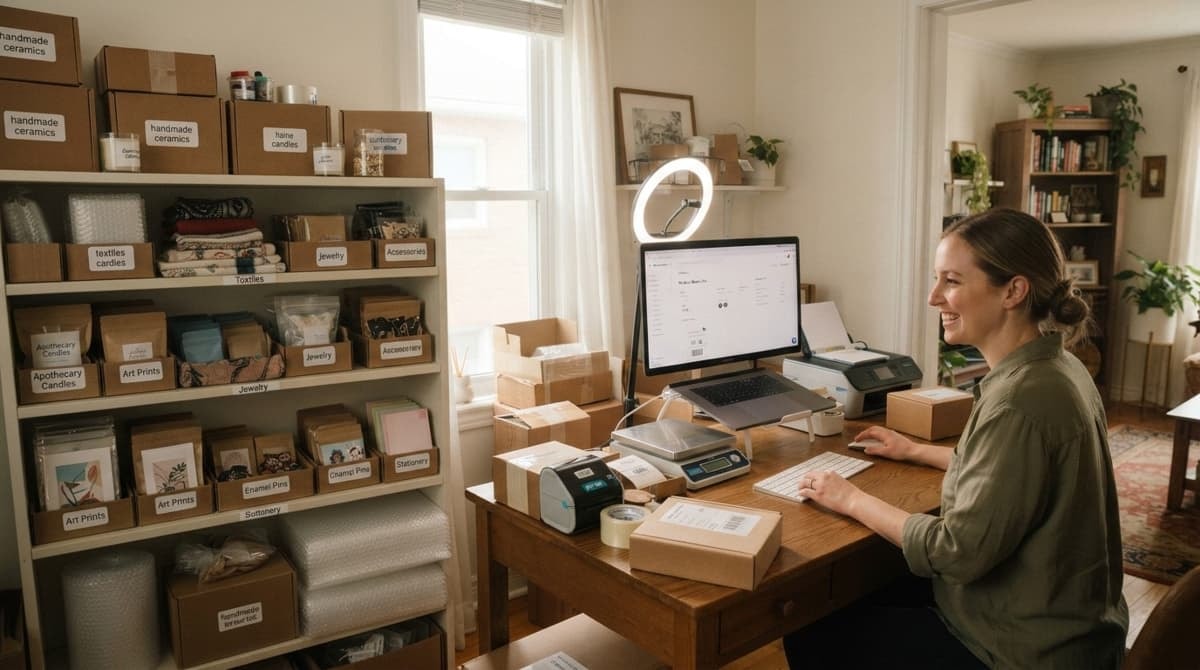
It’s a quiet Tuesday. You walk into your spare room and find water dripping from the ceiling onto six boxes of stock you were about to ship. Or maybe a package gets stolen off your porch, or a customer slips on your front steps while picking up an order.
On this page (9 sections)
If you sell online from home, you may wonder whether your homeowners policy will help. When it comes to homeowners insurance and online store inventory at home, the honest answer is: partly, but far less than most sellers expect.
This guide walks you through three separate questions: the building, the goods and the liability. You’ll also get a simple checklist to see where your stock is exposed.
Does a Homeowners Policy Cover Your Store Inventory?
A standard homeowners policy covers only a small amount of business property, usually leaves out business liability, and often treats stock you plan to sell as the weakest spot.
Here’s what that can look like in real numbers. Many standard policies pay about $2,500 for business property kept at home and about $500 for business property kept away from home. Treat those as common examples, not promises. Your limits may be higher, lower or worded differently, depending on your insurer, your state and your policy form.
Why so low? Homeowners insurance policy is built to protect your home and your personal belongings. It isn’t built to protect a business. Insurers see inventory as a business risk, so they either cap it at a small amount or leave it out. Some policies pay a little toward equipment like a laptop or printer but nothing for stock you hold for sale.
The only way to know for sure is to read your own declarations page, the summary page at the front of your policy. We’ll show you how in a moment. For now, remember this: if your stock is worth more than the cap, you pay the difference yourself.
Building, Goods and Liability: Three Different Questions
When people ask whether their insurance “covers the business,” they’re usually mixing up three different things. Splitting them apart makes everything clearer.
| Question | What it means | Typical homeowners result |
| Building | Walls, roof, garage, shed | Usually covered for fire, storm and similar causes. A detached building used for business may be left out. |
| Goods | Stock, packaging, shelving, equipment | A small business-property cap, or excluded |
| Liability | A customer is hurt, or a product causes harm | Business activity is usually excluded |
The building. This is your house itself: walls, roof, floors and attached garage. If a fire or storm damages the structure, your policy normally pays to fix it. Your online store doesn’t change that. One catch: a detached shed or garage that you use for business may be left out.
The goods. This is your stock, packaging, shelving and equipment. Here the policy usually pays only up to a small cap, or nothing at all.
The liability. This is your legal responsibility if someone gets hurt or their property is damaged because of your business. Homeowners liability coverage is meant for everyday life, so business activity is usually excluded.
This is where many denied claims begin. As the National Association of Insurance Commissioners (NAIC) warns small business owners working from home, assuming your personal policies automatically cover your business inventory and liability can lead to costly surprises. And even when the structure is covered, how you use a space can change what your policy will pay.
Where Is Your Stock Right Now?
Where your stock sits changes the coverage you’re likely to get. Walk through your home and your car and note where every item is kept. Then use this list. “Likely limited” means a small cap probably applies. “Often excluded” means many policies pay nothing. “Ask your insurer” means it depends on your policy.
Spare room or home office: Likely limited
This is the most common spot, and the one most likely to fall under the small business-property cap. Take dated photos of your shelves and keep receipts or supplier invoices. If you ever file a claim, proof of what you owned and what it cost makes things much smoother.
Garage: Likely limited
The garage structure is usually covered, but stock stored inside falls under the same small cap. Garages also face extra risks like water seeping in, theft, and extreme heat or cold, so think about what could be damaged there.
Basement or attic: Ask your insurer
A burst pipe, appliance leak or storm is the classic way stock gets ruined. Many policies cover sudden water damage but not all water, and flood usually needs its own flood insurance policy. Ask exactly what applies to your stock in this part of the house.
Detached shed or backyard building: Often excluded
Many policies don’t cover outbuildings used for business, so neither the structure nor what’s inside may be protected. If your stock lives in a shed, ask your insurer before you assume anything.
Storage unit: Likely limited
Stock kept away from home often gets the lower “away from home” cap, which can be just a few hundred dollars. Ask whether the storage facility’s own protection helps. Many only cover the building, not your belongings.
Car or van: Often excluded
If you sell at markets, pop-ups or craft fairs, stock in your vehicle may fall under the small away-from-home limit, and theft from a vehicle can be limited even further. Auto policies usually don’t cover business stock either. Ask both insurers.
Third-party warehouse or fulfillment center: Often excluded
When another company stores your goods, your homeowners policy is unlikely to apply. Read the provider’s terms to see what they cover, and consider your own business coverage for any gap.
Stock at a friend or family member’s home: Ask your insurer
Moving boxes to someone else’s house doesn’t turn them into personal belongings. Business rules still apply, and the other person’s policy won’t cover your stock. Don’t assume.
Shipping: Boxes Waiting, in Transit and Coming Back
Shipping adds a few more places where things can go wrong.
Packed and waiting for pickup
Orders sitting in boxes by your door or on your shelf are still business property at home. The same small cap applies.
In transit with a carrier
Homeowners policies aren’t built for goods on the move. A type of business coverage called inland marine, often described as “goods in transit” coverage, can protect products while they’re being transported. It’s worth asking about if you ship high-value items or take stock to events.
Returns and damaged goods
If a carrier loses or damages a package, you may have to refund the customer or send a replacement. Without the right coverage, that loss can come out of your pocket. A claim with the carrier can help, but it isn’t guaranteed.
Shipping insurance is not the same as property insurance
Paid shipping protection can reimburse you for a lost or damaged shipment. It doesn’t protect the stock sitting at home, and it doesn’t protect you if a product you shipped hurts someone. Think of it as one small piece of the puzzle, not the whole picture.
Business-Property Limits: How Much Will Actually Be Paid?
Let’s talk about what the insurer will actually pay.
The usual caps. Many standard policies set a small limit for business property at home and a smaller one away from home. The $2,500 and $500 figures we mentioned are common examples. Yours may differ.
Raising the limit. Some insurers let you add a home business endorsement, which is an add-on to your policy. It can raise the business-property limit, sometimes to $5,000 or $10,000. Not every insurer offers it, and the price depends on your situation.
A detail many sellers miss. Some add-ons don’t apply to property you hold for sale or delivery. One insurer’s rules, for example, say the higher limit doesn’t cover business property that’s stored, held as a sample, or for sale or delivery after sale. For an online seller, that wording matters a lot, because stock is exactly that. Ask to see the exact wording in your own policy.
A quick example. Say you hold $12,000 of stock and your cap is $2,500. A covered loss would leave you with a $9,500 gap.
Hobby or business? If you sell regularly to make money, assume your insurer sees it as a business, even if the income is small. Some people argue that a casual hobby isn’t a “business,” but that’s a risky argument to rely on after a loss.
The Liability Gap: Customers, Products and Packages
Property is only half the story. The bigger risk can be liability.
A standard homeowners policy generally doesn’t cover claims for injury or damage that come from business activity. Here are three everyday examples:
- A customer picks up an order and trips on your steps.
- A product you sold causes a rash, a burn or a fire.
- A delivery driver is hurt at your door.
In each case, your insurer may say the claim comes from your business and deny it. Courts have backed insurers up on this in many cases, so it’s not just fine print. Legal costs alone can add up quickly, even if you did nothing wrong.
What is product liability?
As outlined in the U.S. Small Business Administration (SBA) business insurance, product liability covers claims that a product you sold injured someone or damaged their property and it applies even if you didn’t make the product yourself, so it matters for resellers and dropshippers as well as makers.
Some insurers offer a business pursuit endorsement that adds limited liability coverage. It can help in some cases, but exclusions still apply, so it doesn’t fully replace real business liability coverage.
Ways to Close the Gaps
You have several options. Here’s how they compare.
| Option | What it adds | Best for |
| Home business endorsement | A higher business-property limit on your home policy | Small stock, no customer visits |
| In-home business policy | A property and liability package made for home-based businesses | Growing sellers working from home |
| Business owner’s policy (BOP) | Bundles property (equipment, supplies, goods in transit) with liability, including product liability | Sellers with real stock and customer contact |
| Commercial property and inland marine | Protection for stock at home, in storage and on the move | Higher-value or mobile stock |
| Product or general liability | Injury and damage claims | Anyone selling physical products |
Match the option to your situation. If your stock is small in value and nobody visits, an endorsement may be enough. If customers pick up orders, you ship daily, or your stock is worth more than your policy’s cap, look at a small business insurance policy such as a BOP, commercial property, or general liability plan. Prices vary, so compare quotes across coverage types.
Conclusion: Your Next Step
Homeowners insurance and online store inventory at home don’t mix as well as most sellers hope. Remember the three-part rule: the building, the goods and the liability are separate questions, and each may need its own answer.
Your next step is simple. This week, pull out your declarations page, fill in the tick-the-box summary, and talk to an advisor about a home business endorsement or a small-business policy. A short call now can save you thousands later.
How ChaCha Insurance can help
ChaCha Insurance is an independent insurance agency based in Chatsworth, California. Tell us what you need covered and we will compare quotes from the insurance companies we work with, free.
Coverage in this guide
Frequently Asked Questions
Is inventory covered if I only sell part-time?
Part-time doesn’t make you safe. If you sell regularly to make a profit, business limits and exclusions will likely apply. Ask your agent how your insurer treats side businesses.
Does homeowners insurance cover packages stolen from my porch?
Personal purchases stolen from your porch may be covered as personal property, subject to your deductible. Business stock follows the business rules above. Check your deductible before filing, since it may be higher than the item’s value.
Do I need to tell my insurer I run an online store?
It’s a smart move. Telling them lets you ask about add-ons and avoids surprises at claim time. Not mentioning a business can lead to a denied claim.
Does the platform (Etsy, Amazon, Shopify) insure my stock?
Generally no. Marketplaces rarely insure your stock or your liability. Some offer limited shipping protection programs, so read the seller terms.
Can I just raise my personal property limit?
That usually won’t solve it. The business-property cap is a separate, smaller limit inside your policy, and raising the overall limit typically doesn’t lift it. You need a business-property add-on or a business policy.